Family-owned since 2014 · 4.99 ★ × 463 reviews · 16,000+ jobs
Donation Pickup Service in Connecticut
A paid hauling service for households that want donations attempted first. Same pricing as junk removal. Goodwill / Habitat / Salvation Army are our first stops; what they can't take gets recycled or responsibly dumped.
16,000+
jobs completed
4.99 ★
463 reviews
Family-owned
since 2014 (12 years)
Licensed & insured
in Connecticut & New York
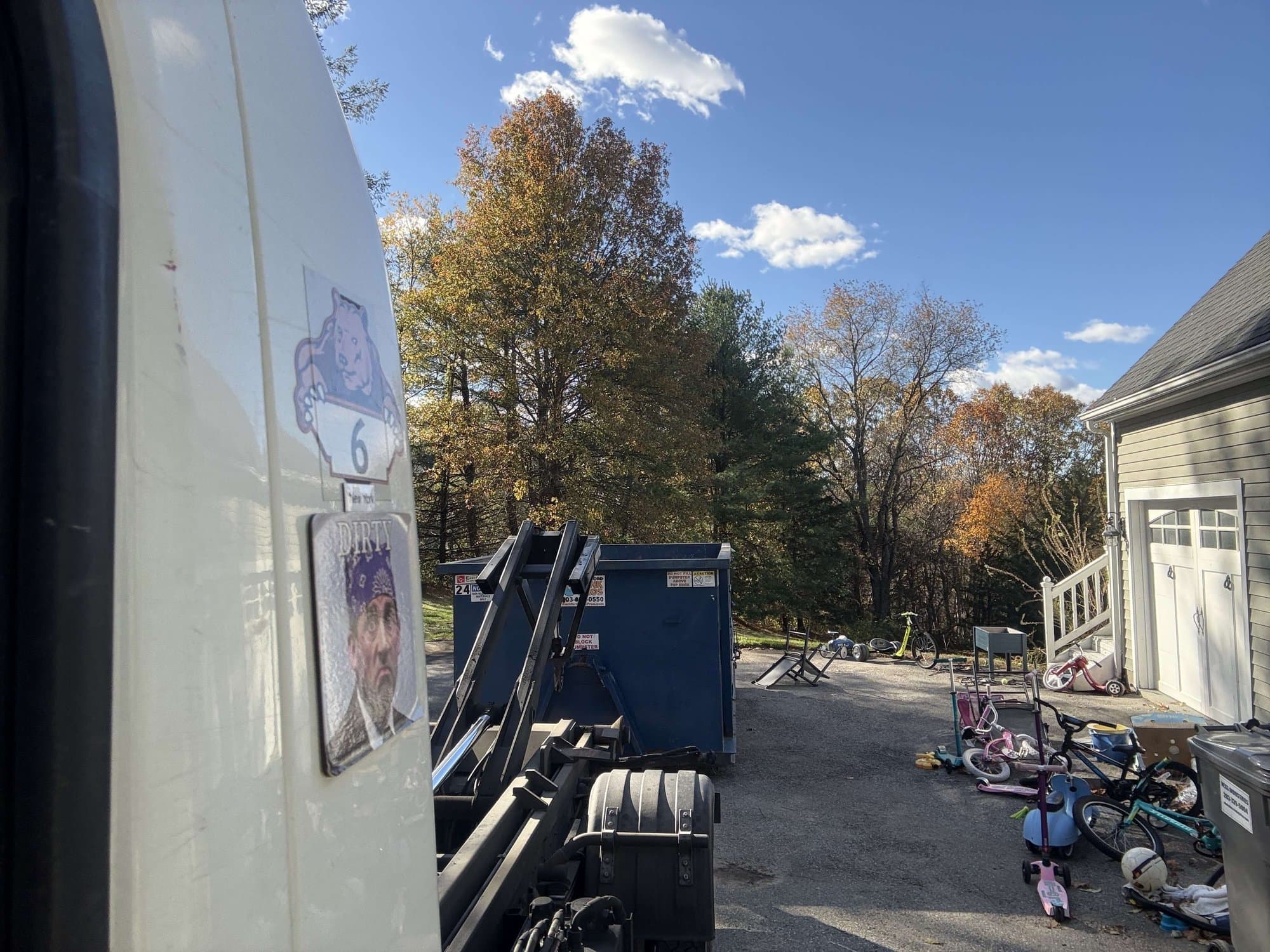
I'm Justin Hubbard. I run Grizzly Junk Pros — the dba of Stamford Junk Pros LLC. Donation pickup is a paid service we offer, billed the same way we bill junk removal: by truck-space at the curb, $145 minimum to $795 full truckload. The 13-tier pricing grid is the same.
What's different from regular junk removal is the routing. On a donation-pickup job, we attempt donation first — Goodwill, Habitat ReStore, and Salvation Army are our standing partners and we know which locations take what. Whatever they won't accept goes to recycling next (metals, electronics, appliances with the refrigerant pulled). Last resort: licensed CT transfer station with the disposal-paper trail.
Common reason to book this service: the nonprofits won't come out. Habitat ReStore pickup calendars often run weeks out in Fairfield County. Salvation Army's residential pickup coverage in CT is limited. Goodwill is primarily drop-off, not pickup. If you've been trying to schedule a charity pickup and the calendar isn't working, we'll do the labor end and the routing end — you pay for the crew + truck + disposal, not for the items themselves.
When customers book donation pickup specifically
Three recurring scenarios, from twelve years of these calls:
1. The nonprofits won't or can't come out
Habitat ReStore pickup calendars often run weeks out in Fairfield County. Salvation Army's residential pickup coverage in CT is limited. Goodwill is primarily drop-off, not pickup. If your timeline is "this week" and the charity calendar isn't lining up, our truck is the way.
2. Leftover after a charity visit
Habitat sent a truck, took the cabinets, left the dishwasher (won't take broken). Salvation Army took the couch but left the matching loveseat (their dock space ran out). We come and clear the leftover — donation-attempt first, recycle or dump second.
3. Professional triage
You want someone to look at each item and route it correctly. Donatable → charity. Recyclable → recycler. Not either → licensed transfer station with disposal records. Each charity's accept list shifts over time — we track what each one is actually taking today so items end up where they'll be accepted, not bounced back. Self-triage at the curb leads to wasted dock trips and items ending up dumped that didn't need to be.
How donation pickup works
1. We arrive, you walk us through what should be donated
Same as a junk removal job — on-site walkthrough or pre-call. Mention any specific donation preferences (e.g., "the kids' clothes go to Salvation Army, kitchen stuff to Goodwill"). We flag preferences on the dispatch ticket where possible. We can't guarantee specific charities because day-of routing depends on the truck's schedule, but we'll honor preferences when feasible.
2. We attempt donation routing first
Donatable items ride in our truck to whichever Goodwill / Habitat ReStore / Salvation Army is convenient. The charity issues a tax-deductible receipt at drop-off; we forward it to you. (Tax-receipt mechanics are expanded in the section below — you must ask before the truck leaves.)
3. Items they won't take: we recycle when possible
Working metals → metal recycler. Working electronics → CT-licensed e-waste channels. Refrigerant-containing appliances (fridges, freezers, ACs, dehumidifiers) → certified-tech reclaim per EPA rules. Cardboard, paper, intact glass → curbside / single-stream where applicable.
4. Last resort: licensed transfer station
What can't be donated or recycled goes to a licensed CT transfer station with disposal paperwork. We don't shortcut this step — every pound of debris ends up somewhere licensed.
Our donation routing partners
Three Connecticut organizations cover the vast majority of our donation drops. We're regular donors at all three — not formal partners. We drop items, they accept what's in donatable condition, and they issue a receipt for what they took. We've never claimed otherwise.
Routing is opportunistic — we drop at whichever partner's dock is open and accepting items that day. We don't promise specific charity placement; we promise donation-first attempt before recycling or transfer station.

Goodwill — Connecticut footprint
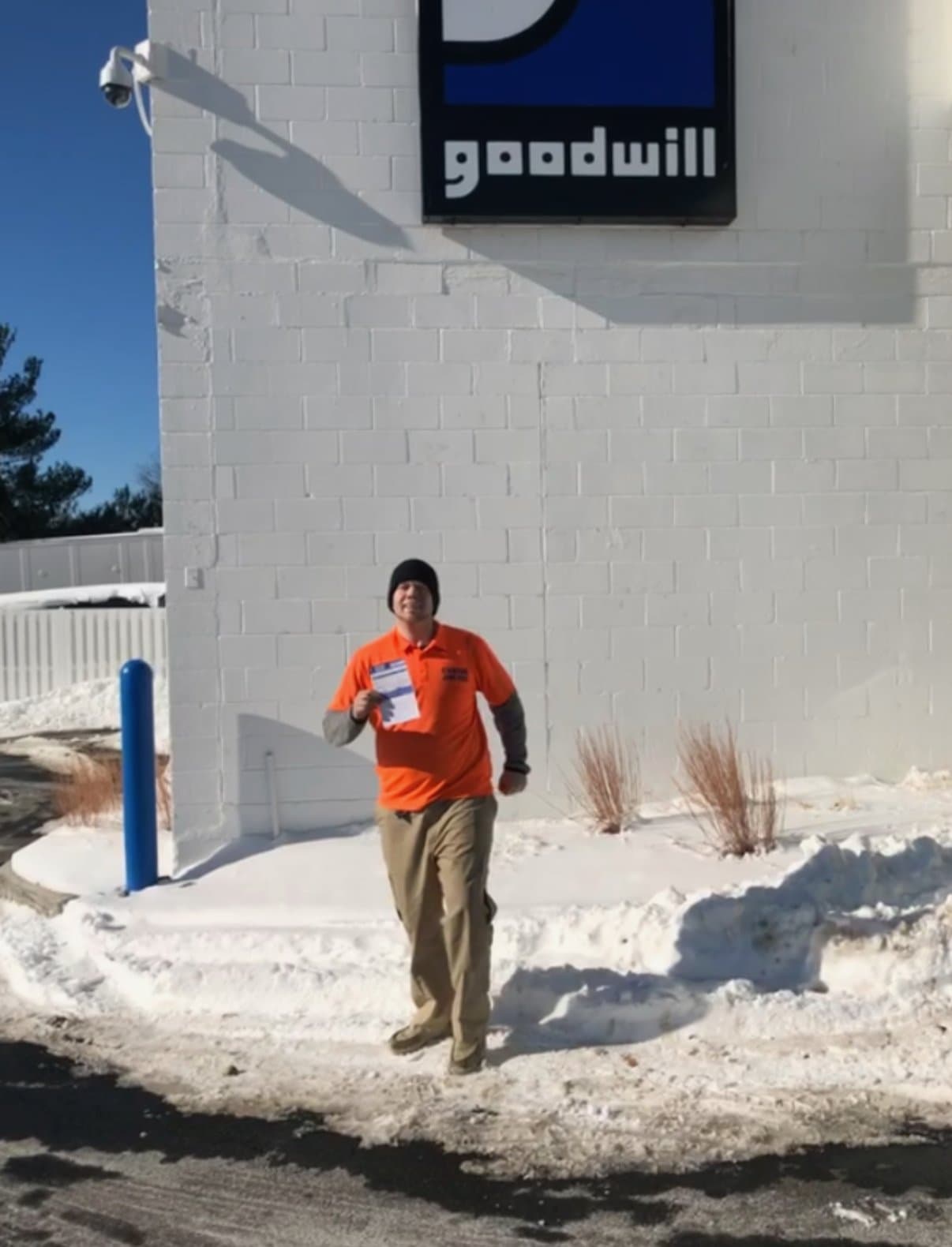
Goodwill Industries of Western & Northern Connecticut runs thrift stores across Fairfield, New Haven, Litchfield, and Hartford counties. We drop usable furniture, clothing, household goods, books, kitchenware, and small appliances at whichever Goodwill store is on the way relative to the day's truck route.
Goodwill is the broadest-acceptance charity in our rotation — they take a wide range of household items in usable condition. They've also got the most thrift-store coverage across our service area, so there's almost always a Goodwill close to a job site.
Habitat for Humanity ReStore
Habitat ReStore takes used building materials, working appliances, furniture, kitchen cabinets, light fixtures, doors, windows, and home goods. The Stamford / Norwalk / Bridgeport / Waterbury locations all serve our service area, plus more across the state.
Habitat ReStore is the best route for renovation-cleanout items and working appliances. Pulled-out cabinets, working dishwashers, fixtures from a bathroom remodel — those things tend to be too specialized for a general thrift store but exactly what a ReStore wants on the floor.
Salvation Army — Connecticut Family Stores
Salvation Army runs Family Stores across CT and accepts furniture, clothing, household goods, and books in usable condition. We drop where convenient based on the day's truck routing.
Their dock space and acceptance criteria vary by location. For multi-piece furniture donations, we sometimes call ahead to confirm a specific Salvation Army Family Store will take a large-item drop on the day.
What donation pickup costs
Same pricing as junk removal: $145 minimum to $795 full truckload, billed by truck-space at the curb. Three sample tiers from the 13-tier grid:
| Truck space | What fits | Price |
|---|---|---|
| Minimum Load | A few small items: bags, boxes, or one small piece of furniture | $145 |
| 1/4 Truckload (~5 yd³) | Small bedroom contents, partial garage, mid-volume donation pickup | $295 |
| Full Truckload (~20 yd³) | Whole-house volume, multi-room estate-condition | $795 |
Full 13-tier grid lives at /junk-removal#pricing. You pay for crew time + truck space + responsible disposal — not whether items end up donated or dumped. Donation routing fits inside our existing dispatch schedule; it doesn't add a separate fee.
How tax-deductible receipts actually work
The legally important section. Six steps:
1. Tell us before the truck leaves
During the on-site walkthrough or as we're loading, mention you want a donation receipt. If the request comes after the truck has left, we can't go back and reroute — the day's schedule is locked, and items go where the route sends them. Mentioning donation routing during the booking call is even better; we flag it on the dispatch ticket.
2. We assess donatability at the curb
Not everything qualifies. Stained couches, broken dressers, non-working appliances, mildewed mattresses — those go to the transfer station regardless of intent, because the charities won't accept them. We're honest at the curb about what's donatable and what isn't, before anything goes in the truck.
3. We drop at the charity
The donatable subset rides in our truck to whichever Goodwill / Habitat ReStore / Salvation Army location is convenient on the day's route. We don't make special trips for single-item donations — donation routing fits inside our existing schedule, which is part of why it doesn't add a separate fee.
4. The charity issues the receipt to us
Charities are the only parties who can legally issue tax-deductible donation receipts. Grizzly Junk Pros cannot write its own donation receipt — we're a for-profit company, not a 501(c)(3). What you'll receive is a Goodwill / Habitat / Salvation Army form, on their letterhead, signed (or stamped) by their drop-off staff.
5. We forward the receipt to you
Once the charity provides the receipt at drop-off, we email or text it to you. The receipt names the charity, lists what was donated, and (depending on the org) either lists or estimates the value. It's the document you'd attach to a Schedule A non-cash charitable contribution at tax time.
Turnaround is usually same day or the next business day, depending on what time of day the drop happened. Charities don't always issue receipts on the spot for every drop — sometimes we get them at the next visit and pass them along then.
6. Your tax deduction is your responsibility
We're not accountants. The receipt is documentation; whether and how you claim the deduction depends on your tax situation, the IRS rules for non-cash donations (Form 8283 above $500), and your accountant. If the donation value exceeds $5,000, the IRS requires a qualified appraisal — that's outside what a charity drop-off receipt covers, and outside what we do.
What's eligible vs. not
Two columns. Operator-voice candor over marketing copy.
Donatable — what charities will take
- Furniture in usable condition — couches without major rips or stains, dressers with all drawers, dining sets, bed frames, bookcases, side tables. No bedbug evidence.
- Working appliances — refrigerators (with refrigerant intact and certified-tech-removable), washers, dryers, microwaves, small kitchen appliances. Habitat ReStore is the best route for working large appliances.
- Clothing — clean, no rips or stains. Bagged or boxed.
- Household goods, kitchenware, dishes, glassware — usable, complete sets preferred but not required.
- Books, media, exercise equipment, sporting goods.
- Building materials (Habitat ReStore specifically) — kitchen cabinets, doors, windows, light fixtures, faucets, lumber, tile in original packaging, paint in unopened containers.
NOT donatable — goes to recycling or transfer station
- Damaged or broken furniture — anything a thrift store would just turn around and dump themselves
- Non-working appliances — recyclable through metal channels when possible
- Mattresses and box springs — charities won't take used mattresses for hygiene reasons. We route those through Connecticut's Bye Bye Mattress program separately.
- Anything with mold, mildew, water damage, smoke damage, or pest evidence (bedbugs especially)
- Stained or torn clothing
- Hazardous materials — paint (used), oil, chemicals, fuel, batteries. Those go to CT DEEP hazardous-waste channels, not the charity stream.
- Construction debris — drywall, broken concrete, roofing shingles, demo waste. Transfer station only.
- Bed pillows, used towels, used personal items — hygiene exclusions
- Items the charity has specifically said they don't want today (varies by location and time of year — large furniture sometimes, electronics sometimes)
If you're not sure, ask us at the walkthrough. We'd rather tell you "that's not donatable" upfront than load it into the truck and have it rejected at the charity — which would mean a wasted trip to the dock and the items still ending up at the transfer station, just with a longer route.
Why donation routing works for everyone
Not a sustainability marketing pitch. Operational reality.
Connecticut's transfer stations charge by weight. Every couch we divert from landfill is roughly 80-150 pounds we don't pay to dump. For us, donation routing isn't charity work — it's better operations. The charities get usable inventory, our customers get tax receipts when they want them, our trucks burn less weight at the transfer station, and the landfills stay smaller. Everybody comes out ahead.
We don't dramatize this with sustainability marketing copy. The mechanic is straightforward: items in donatable condition leave our truck at a charity dock. Items not in donatable condition go to a licensed CT transfer station. Either way, we don't shortcut the disposal — every pound of debris ends up somewhere licensed, with a paper trail.
Twelve years of doing this means we know which Goodwill takes large furniture (some don't on certain days), which Habitat ReStore is closest to a given job site, and which Salvation Army has the dock space to accept multiple-item drops. That operational knowledge isn't visible to you as the customer — it just shows up as "Justin sent me the donation receipt yesterday."
Related pages
- All services overview — six services from one family-owned hauler. Donation pickup is one of them.
- Junk removal pricing — the same 13-tier truck-space pricing that applies to donation pickup. $145 minimum to $795 full truckload.
- How pricing works — canonical pricing reference across all services.
- Roll-off dumpsters — different service. Customer-loaded; you decide what goes in the can. We don't sort or route from a roll-off.
- Customer reviews — what 463 customers actually said about working with us.
- Book donation pickup — mention donation pickup in the project description and we'll flag it on the dispatch ticket.
For Connecticut-specific hazardous-waste disposal questions (paint, oil, batteries, chemicals — none of which can be donated), the CT DEEP materials management guide is the right reference.
Donation pickup FAQs
Can I book donation pickup as its own service, or is it bundled with junk removal?
What's the difference between donation pickup and regular junk removal?
How fast can you schedule a donation pickup?
Do you donate everything?
Can you guarantee my items go to a specific charity?
Do you handle valuables or heirlooms during a donation pickup?
Will I really get a tax receipt?
Can I get an itemized list of what was donated?
How much will my deduction be worth?
What if the nonprofits won't take any of my items?
Book donation pickup
Phone (203) 219-8855, Mon–Fri 8 AM – 4 PM live, AI after-hours and weekends. Or the quote form below — mention donation pickup in the project description so we flag it for the crew.